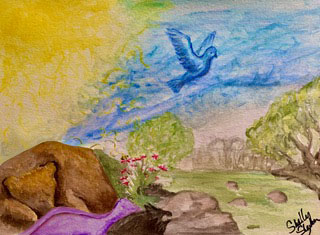
What seems like a lifetime ago, a three-year-old girl approached me to say, “I’m having a purple day.” I knew right away what that meant. As a preschool teacher, the book My Many Colored Days by Dr. Seuss was well worn and loved. This simple color book offers infinite wisdom on different feelings without leaning heavily on feeling words. It includes the message that we can feel mixed up, then reassures the reader that we go back to feeling like ourselves again. In short, this too shall pass, and it will be OK.
I’ve purchased this book for countless baby gifts, because it is also a gift for the new Mom. A new Mom feels all the feels, responds to changing routines, and needs reassurance too. Steadying ourselves to acknowledge emotions, the energy that accompanies them, and extending grace to ourselves as we weather the moment, are all part of finding resilience. This imperfect practice is the stuff of life and motherhood, but the closer we come matters. The example we provide and how we respond to our children shape who they are and how they interact with the world.
Young children, and not so small teenagers can feel overwhelmed by big emotions. They rely on us to witness, respond, and reassure them that their feelings are ok and that we love them no matter the storm. But there is a next step. Helping children develop awareness of emotions, connect with the physical sensations in their bodies, and learn coping strategies for their wellness helps them grow their resilience muscle.
Many people of all ages are quick to distract themselves from their feelings and the sensations that accompany them. A screen might quiet a crying child, but there is something lost when the child doesn’t work through the hard stuff and arrive at the other side of a tantrum or rough spot. Our calming presence can steady them. Then the conversation after the meltdown is an opportunity for growth. When we stay present, and encourage our kids to do the same, it is a gift. Sometimes this gift is incredibly hard to give in an emotional moment, but our steadfast presence helps them find calm in their storm. We help them internalize that we are there for them, this too shall pass, and it is OK. That gift is priceless. Kids build connections, learn emotional regulation, and resilience for their future.
Every emotion is accompanied by a physical contraction, and corresponding chemistry in the body. The breath, facial muscles all can reflect our emotional state. Allowing the energy to pass and find equilibrium again has value that science is just beginning to understand. We are learning a lot about trauma. There are far too many adults, teens, and children stuck in fight, flight, or freeze mode. Consistent stress creates a dance between rigidness and chaos with many missteps. Our bodies need to rest and heal, but our nervous system’s top priority is answering the perceived threat. A lack of integration and resolution compromises the individual’s body, mind, and relationships.
I remember a story on NPR years ago highlighting a study on children’s literature. They analyzed, categorized, and recorded the frequency of words expressing emotion. They found a dramatic turning point after 9-11: fear was the predominant emotion. Unfortunately, I don’t think this has subsided in our culture, The quote from Celeste Ng comes to mind, “Anger is the bodyguard of fear.” We put up some strong defenses when we don’t feel safe. Often vulnerability would bring us closer and create a softening for better listening and relationships. We have a lot of work to do as a culture. Parents and teachers striving to meet the needs of children have a tall order also.
But there is hope. There are things we can do in our little world. I think it’s wise to remember the pauses we need for self-care. We know that our presence matters in every interaction and communicates far more than words ever can. We can look at our tension and let some of it go. Imagine the softness of a contented child. The supple warm infant molds to us in our arms, and their breath comes and goes with ease. We also can find softness in a few simple breaths. Our mind quiets, and we create a shift in our physical body. The ripple effects extend to our relationships. We can take a break from the fear and anger expressed in the news too. And don’t forget, My Many Colored Days by Dr. Seuss in a pinch.
Dr. Daniel Siegal reminds us that “neurons that fire together, wire together.” His work is insightful and offers much wisdom about a growth mindset and our capacity for change. He reminds us that the mind, brain, and relationships are inseparable. I invite you to take a peek at the neuroscience pages for some of his book titles if you are interested in learning more. His books are like sparkly gems for the parent who wants to guide little or not so little ones, well. Or for the neuroscience geek. I happen to fit both categories.
Learning about the brain helps us to understand ourselves, our children, and to teach them. Years ago, my son struggled with middle school math, despite his giftedness in the subject. That aside, homework felt like a struggle. My wise husband talked with him about the caveman who wanted to eat grapes that were out of reach on a cliff. Pointing to the frontal cortex, my husband spoke about the caveman’s need to solve a puzzle to get those grapes. But if there was a saber tooth tiger, the grapes were not the top priority. The brain stem takes over to help the caveman fight or flee. My husband continued the conversation about modern culture, and how our brains respond as if there were a saber tooth tiger in the room. Weeks later, during math tutoring sessions, my husband would notice my son’s stress level rise. He checked in with my son, asking if there was a saber tooth tiger nearby. It helped my son disrupt the pattern of frustration with a bit of humor. But even more importantly was the opportunity for our son’s awareness of patterns and how his brain works.
The human experience includes suffering and all the emotions that go with life’s ups and downs. This moment of collective pause created by coronavirus comes with many ups and downs as we adjust and readjust to a multitude of changes. Our children’s world has changed too. I hope that schools and institutions recognize the wholeness of children while they answer this challenging moment. I don’t pretend to know all the answers and extend much grace to them. That said, focusing too narrowly on intellectual development does not serve our children or us well. It never has. In all the disruption of our lives, something new can emerge. It will likely feel bumpy like all transitions. Dr. Seuss seems to get it right when he reminds us how it can all feel mixed up, but eventually, things will be ok. I think humans need this message. Our kids do too.
The simplest things still matter: fresh air, sunshine, hugs, relationships, movement, rest, purposeful work, play, healthy food, water, and grace for ourselves and our loves. So feel the feels, and connect with your body. Notice what gives you energy and what takes it away. Be kind to yourself, and it will be easier to show kindness to others. Our kids will notice and build their resilience muscle. I wish you love, light, wellness, and grace in these many colored days.
 Mindful Play in Motion, LLC
Thank you for your wise reminders! Just today I have assembled quite a few colors in my own personal rainbow 🌈
LikeLike
Me too! So happy you stopped by. Wishing you love and light with all those colors of the rainbow.
LikeLike